
A heart that suddenly starts beating very fast can be alarming. For some people, the episode lasts only a few minutes before the heartbeat returns to normal. For others, it may continue for longer and come with dizziness, breathlessness, chest discomfort, or a feeling of weakness. When these episodes happen repeatedly, they can become more than an occasional inconvenience and may begin to affect everyday life.
For patients who have been diagnosed with supraventricular tachycardia (SVT), svt ablation abu dhabi can be one of the treatment options worth discussing with a cardiologist. The procedure is designed to deal with the abnormal electrical pathway causing the rapid heartbeat. Unlike medicines that control the rhythm while they are being taken, ablation aims to prevent the abnormal circuit from continuing to trigger episodes.
What Exactly Is SVT?
Supraventricular tachycardia is a heart rhythm problem in which the heart suddenly beats much faster than usual. The abnormal electrical signal starts in the upper part of the heart rather than the ventricles.
One of the characteristic features of SVT is that an episode can begin suddenly. A person may be sitting, walking, working, or even resting when they suddenly become aware of a racing heartbeat. The episode may also stop abruptly.
Some people have SVT only once in a while, while others experience it several times a month or even more frequently. The condition can occur in otherwise healthy people as well as those with other heart conditions.
What Does an SVT Episode Feel Like?
The symptoms are not exactly the same for everyone. A fast or pounding heartbeat is usually the most noticeable sign, but other symptoms can appear alongside it.
These may include:
- A rapid, pounding, or fluttering heartbeat
- Dizziness or light-headedness
- Shortness of breath
- Chest pressure or discomfort
- Feeling unusually tired
- Sweating
- Anxiety during the episode
- Feeling faint
Because similar symptoms can occur with other rhythm disorders and medical conditions, it is important not to assume that every episode of a fast heartbeat is SVT.
An ECG can help identify the rhythm, particularly when it is recorded during an episode. If the heartbeat has returned to normal by the time a patient reaches the clinic, a doctor may suggest longer-term monitoring to try to capture a future episode.
Why Might Someone Consider Ablation?
Treatment depends on how often SVT occurs and how much it affects the individual. Someone who has very occasional episodes may not need an invasive procedure. In some cases, a doctor may recommend medication or teach the patient certain techniques that can sometimes help stop an episode.
Ablation may be discussed when episodes are frequent, particularly uncomfortable, difficult to control, or interfering with normal activities. It can also be considered when medicines are not working well or cause unwanted side effects.
The decision is personal. A patient and their cardiologist need to weigh the frequency and severity of symptoms against the benefits and possible risks of the procedure.
How Is the Ablation Procedure Performed?
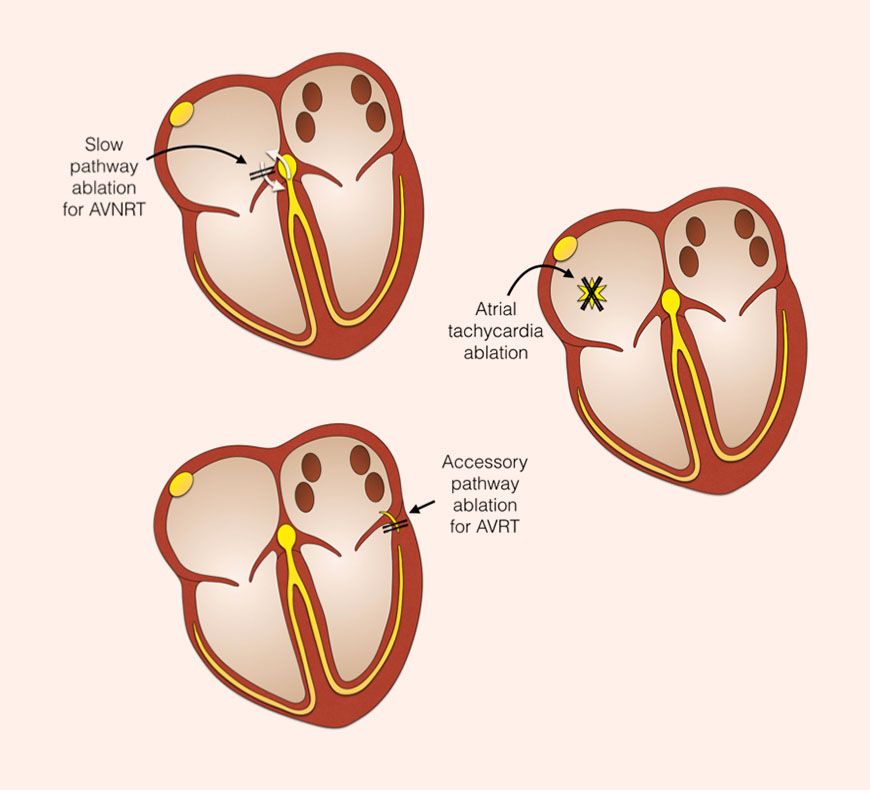
Catheter ablation does not involve opening the chest. Instead, the doctor uses thin, flexible tubes called catheters, which are usually introduced through a blood vessel in the groin and carefully guided toward the heart.
The first part of the procedure involves mapping the heart's electrical activity. This helps the specialist locate the pathway responsible for the abnormal rhythm.
Once the problematic area has been identified, energy is delivered through the catheter to create a small area of scar tissue. This prevents the abnormal electrical signals from travelling through that pathway in the same way.
The exact technique depends on the type of SVT and the electrical pathway involved. The procedure is carried out in a specialised setting with continuous monitoring.
Is Ablation Suitable for Everyone?
No. Although catheter ablation is an established treatment for several types of SVT, it is not automatically recommended for every patient.
Before making a decision, the cardiologist will consider the type of arrhythmia, the patient's symptoms, previous treatment, general health, and the results of cardiac tests.
A detailed medical history is particularly useful. Patients should tell their doctor how often the episodes occur, how long they usually last, and whether they have experienced fainting, chest pain, or breathing difficulties.
Sometimes an ECG or heart monitor can provide the information needed to confirm the exact rhythm before treatment is considered.
What Happens After the Procedure?
After ablation, the patient is observed for a period to make sure the heart rhythm remains stable and there are no immediate complications. The catheter insertion site may be sore or bruised for a short time.
Most people can gradually return to their usual routine according to their doctor's advice. The timing varies depending on the individual and the details of the procedure.
A follow-up appointment is generally part of the process. It gives the cardiologist an opportunity to discuss any symptoms that have occurred since treatment and decide whether further monitoring is necessary.
Are There Risks Involved?
As with any medical procedure, catheter ablation carries some risks. These can include bleeding or bruising where the catheter was inserted, infection, damage to a blood vessel, or problems affecting the heart's normal electrical system.
Serious complications are uncommon, but the level of risk depends on the patient's health and the particular procedure being performed. A specialist should explain these risks clearly before treatment so the patient can make an informed decision.
Where Can Patients Find Reliable Information?
Heart rhythm problems can be difficult to understand, particularly when symptoms appear suddenly and disappear just as quickly. Patients can benefit from learning about their condition from reliable medical sources and discussing their concerns directly with a qualified specialist.
The Heart.ae is one resource where readers can find information about cardiovascular conditions, diagnosis, and treatment. Such information can help patients prepare for conversations with their healthcare providers, although it should not replace an individual medical assessment.
For someone considering svt ablation abu dhabi, the most useful next step is a consultation with a cardiologist or electrophysiologist who can review the diagnosis and explain whether the procedure is appropriate. There may be several reasonable approaches, and the right choice depends on the person's symptoms, medical history, and preferences.
A sudden racing heartbeat can be unsettling, but living with repeated episodes without understanding their cause is not the only option. Proper diagnosis can explain what is happening, while a discussion about treatment can help patients decide how they want to manage their condition going forward.